Overview
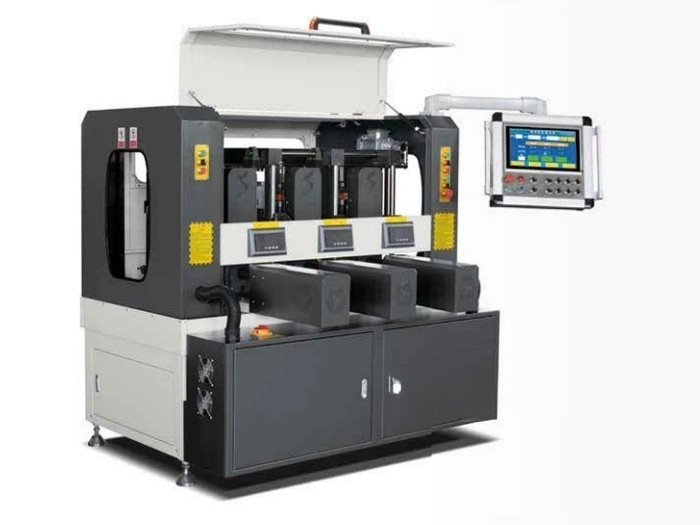
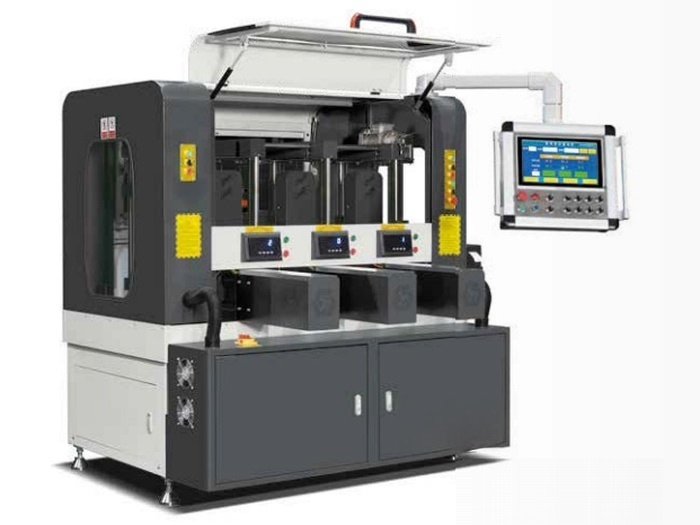
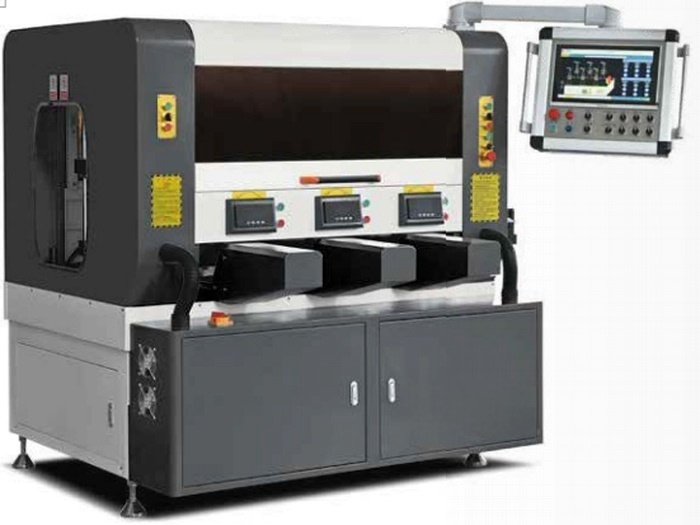
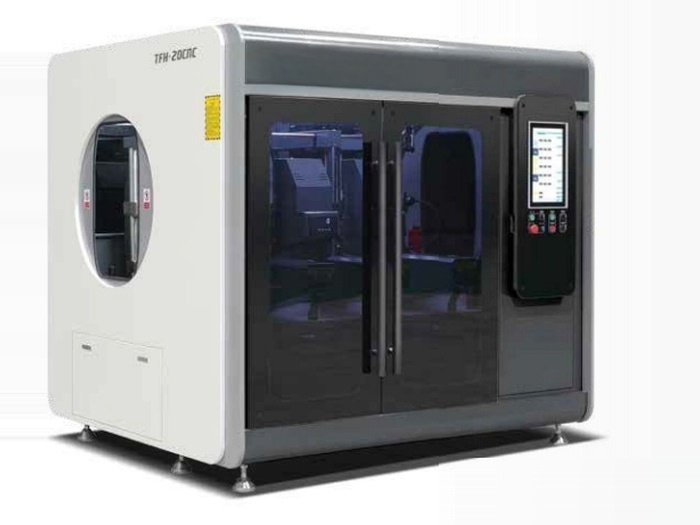
The TFH-20CNC is the flexible all-rounder of the TFH family. Six cutter-head groups, the upper nylon cots and three pressure groups are under full numerical control, while front and rear separation cutter heads (3 segments each) correct forward/backward misalignment and the rear lower head adds 3-axis misalignment lifting. Special-shaped and misaligned profiles are adapted in minutes, not shifts.
The professional intelligent control system includes automatic nesting: scan the profile QR code and the data imports with one key, and every pressure parameter can be adjusted simultaneously or independently through servo motors. More than 2,000 profile programs stay in memory for instant recall.
Key Features
- 20-axis flexibility — six cutter-head groups, upper nylon cots and three pressure groups all numerically controlled.
- Super error correction — rear separation lower cutter head with 3-axis misalignment lifting; front and rear separation upper cutter heads adjust forward/backward.
- 80–100 mm strip compatibility with per-head width freely CNC-adjustable — no tooling change between strip widths.
- Fast straightening — nylon cots lift to correct bowed profiles and hold verticality and parallelism.
- Scan-to-produce — QR code one-key import with automatic nesting; 2,000+ stored profile programs.
- Solid drive train — linear guide rails, ball screws, Schneider electrics and simultaneous/independent servo pressure control.
Technical Specifications
| Parameter | Value |
|---|---|
| Power supply | 380 V / 50 Hz |
| Total power | 16.6 kW |
| CNC axes | 20-axis CNC |
| Cutter-head separation distance | 0–180 mm |
| Cutter-head opening height | 8–90 mm |
| Max. profile cross-section | 300 × 300 mm |
| Positioning accuracy | ± 0.05 mm |
| Profile feeding speed | 6–60 m/min |
| Overall dimension | 2050 × 1960 × 1900 mm |
| Machine weight | ≈ 2,000 kg |
| Profile program memory | 2,000+ profiles, one-button recall |
| ERP machine option | Available on request |
Profile Misalignment States
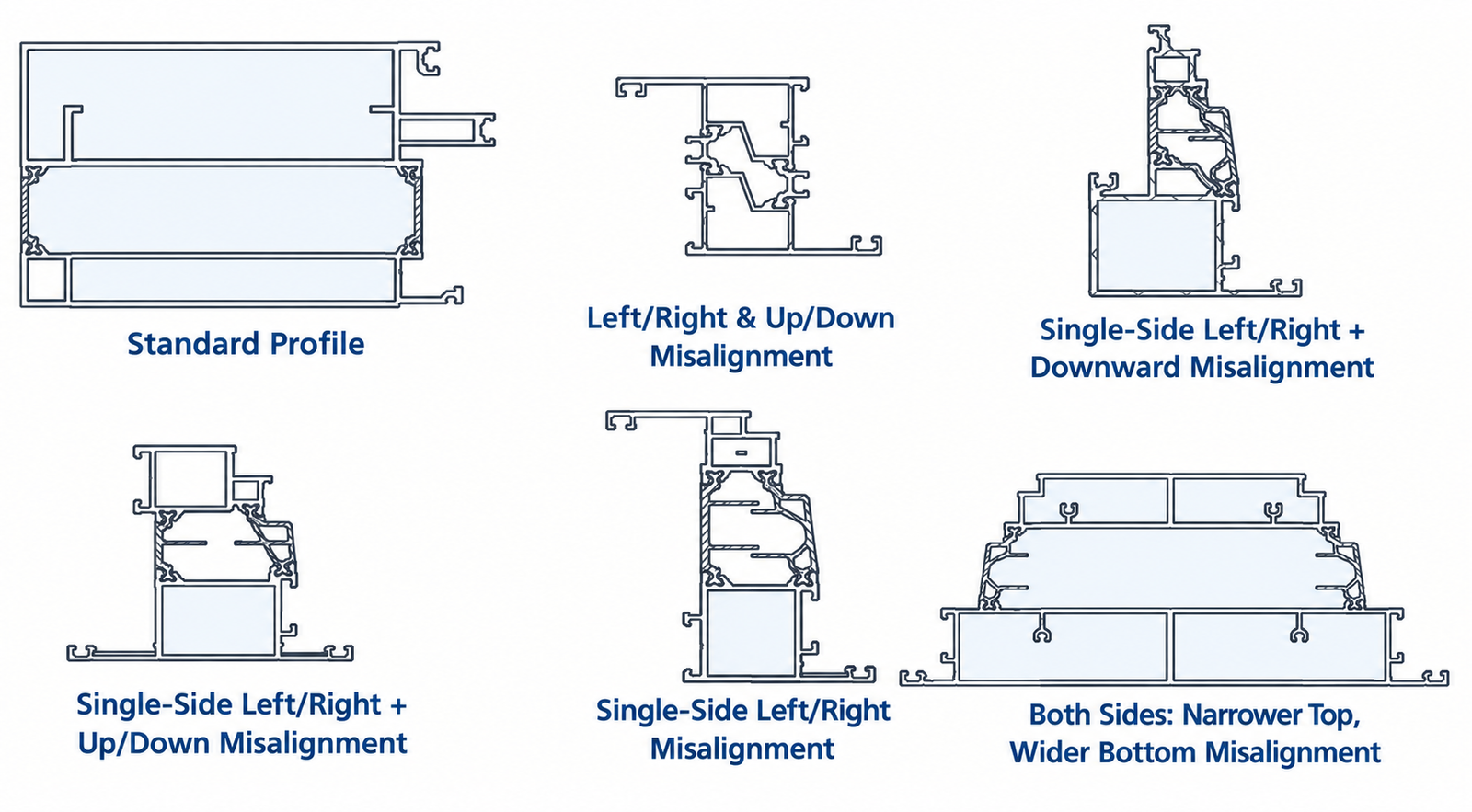
The 20-axis configuration covers all three misalignment families with the fullest station setup of the mid-range machines.
Working Process
- Feeding — the knurled and strip-inserted profile enters the rolling station on the infeed conveyor.
- Positioning — scan the profile QR code: the control imports the section data, nests it automatically and every head moves to position at once. Front and rear separation heads correct forward/backward offset, and the rear lower head adds 3-axis lifting for height offset.
- Rolling & crimping — pressure parameters can be moved together or trimmed head by head through the servos, without losing the imported baseline.
- Output — finished profiles leave straight and parallel, ready for packing, machining or the thermal break assembly line.
Quality & Standards
Every TFH machine is assembled and inspected above industry standard with a three-step pre-delivery inspection. On the 20-axis model the check is a QR round trip: a stored program is imported, all 20 axes are positioned and every axis is compared with the drawing before shipment; a special-shaped test section is then crimped and sectioned. Rolled sections hold longitudinal shear to GB/T 5237.6-2017 and bending to the high-precision class of GB/T 5237.1-2017.
Applications
- Plants running mixed series and special-shaped sections, where changeovers happen several times a shift.
- Factories that already QR-code their profile drawings and want drawing-to-machine without manual keying.
- Curtain-wall and facade producers with staggered strip grooves in both directions.
Part of the TFH rolling & crimping range — five models from 11 to 37 axes. For sections outside the 0–180 mm cutter-head span, the TFH-37CNC drives every pressure roller on its own servo.
FAQ
How fast is a profile changeover?
With a QR-coded drawing, the import takes seconds and one key positions all 20 axes; without one, recall from the 2,000+ stored programs. Either way the heads move themselves — there are no hand wheels to re-set.
What does scan-code import actually do?
It reads the section data from the profile’s QR code, nests it in the control and writes the axis positions for every head. Manual keying — the most common cause of a scrapped first piece — drops out of the changeover.
Do different strip widths need different tooling?
No. Per-head width is CNC-adjustable, so different strip widths run without changing cutters.